
The Standard Thyroid Blood Test UK is a key diagnostic tool for assessing thyroid function and treating related disorders. Measuring TSH, T3, and T4 hormones, it offers insights into metabolic health. Preparation tips include stable diet, avoiding caffeine/alcohol, managing medications and blood sugar, and ensuring adequate rest. Interpreting results requires understanding reference ranges and considering individual factors; deviations indicate potential hypothyroidism or hyperthyroidism. Repeated testing and consultation with an endocrinologist are recommended for accurate diagnosis.
The thyroid gland plays a pivotal role in our overall health and well-being, regulating metabolism and influencing numerous bodily functions. In the UK, patients often require a Standard Thyroid Blood Test UK to diagnose and manage thyroid-related disorders effectively. However, navigating this process can be confusing for many, especially with varying guidelines and an overwhelming amount of information available. This article aims to demystify the standard thyroid examination kit, offering a comprehensive guide for UK patients to understand their tests, interpret results, and make informed decisions regarding their thyroid health.
- Understanding Your Standard Thyroid Blood Test UK
- Preparing for Your Thyroid Examination in the UK
- Interpreting Results: A Guide to Standard Thyroid Blood Test UK
Understanding Your Standard Thyroid Blood Test UK
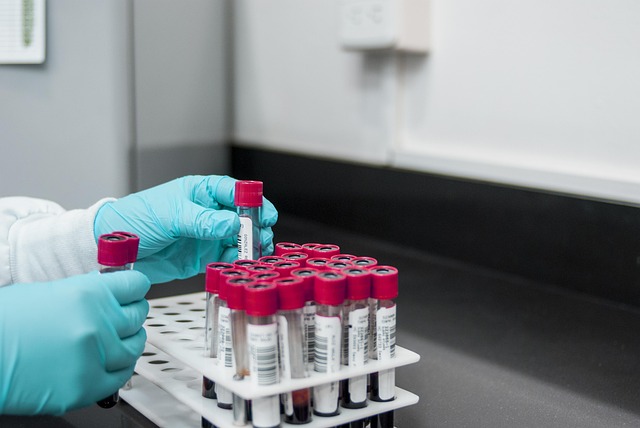
The Standard Thyroid Blood Test UK is a critical tool for healthcare professionals to assess thyroid function and diagnose thyroid-related disorders. This test measures key hormones produced by the thyroid gland, providing insights into overall metabolic health. In the UK, access to such tests is readily available, enabling patients to take an active role in managing their well-being. For instance, many reputable labs in Birmingham offer dairy intolerance tests alongside comprehensive hormone panels, catering to a range of patient needs.
When interpreting results from a Standard Thyroid Blood Test UK, it’s essential to understand the reference ranges and what they signify. TSH (Thyroid Stimulating Hormone) levels, for example, indicate how well the thyroid is functioning; elevated TSH may suggest hypothyroidism while low levels could point to hyperthyroidism. This test often includes measurements of T3 and T4 hormones as well, which are responsible for regulating metabolism. A case in point, a liver blood test in Reading might reveal elevation of ALT and AST enzymes, indicating potential liver damage, and thus, requires further investigation.
For women concerned about fertility, specific blood tests like the female fertility panel in Leeds can provide valuable information. This test assesses hormones crucial for reproductive health, such as FSH (Follicle Stimulating Hormone) and estradiol, helping to identify potential barriers to conception. It’s worth noting that while these tests offer valuable insights, they should be interpreted by qualified healthcare providers who consider individual patient factors. Regular monitoring of thyroid markers through Standard Thyroid Blood Tests UK can help manage conditions like autoimmune thyroiditis or hypothyroidism, ensuring optimal health outcomes.
Preparing for Your Thyroid Examination in the UK
Preparing for your thyroid examination in the UK involves understanding what to expect and how to ensure accurate results. The standard thyroid blood test UK, known as a full blood count (FBC) in Nottingham, assesses various components of your blood related to thyroid function. It measures levels of thyroid-stimulating hormone (TSH), thyroxine (T4), and triiodothyronine (T3). These hormones play a crucial role in regulating metabolism, body temperature, heart rate, and even weight.
To prepare for this test, it’s important to maintain a stable diet and avoid excessive caffeine or alcohol consumption prior to the examination. Certain medications can also interfere with results, so consult your healthcare provider about any you may be taking. In cities like Oxford, where diabetes blood tests are common, maintaining normal blood sugar levels is equally crucial as thyroid function can impact insulin sensitivity. Similarly, a liver blood test in Milton Keynes or elsewhere might be recommended to rule out other systemic conditions that could affect thyroid performance.
On the day of your appointment, bring any relevant medical history and a list of current medications. Some simple lifestyle adjustments can significantly improve the accuracy of your results. For example, aim for adequate sleep, stay hydrated, and engage in regular physical activity. These measures help reduce stress on your body, ensuring that your thyroid function is accurately represented in the test results.
Interpreting Results: A Guide to Standard Thyroid Blood Test UK

Interpreting results from a Standard Thyroid Blood Test UK is a critical step in accurately diagnosing thyroid conditions. This test measures levels of thyroxine (T4), triiodothyronine (T3), and thyroid stimulating hormone (TSH). Normal ranges vary slightly between laboratories, but generally, TSH should fall between 0.4 to 4.0 mU/L, T4 between 9 to 27 pmol/L, and T3 between 0.8 to 2.0 nmol/L. Deviation from these norms could indicate hypothyroidism (low thyroid function) or hyperthyroidism (high thyroid function).
For example, if a female hormone blood test Bournemouth reveals elevated TSH levels accompanied by low T4 and T3, it may suggest hypothyroidism. Conversely, a cholesterol blood test Portsmouth showing low TSH alongside high T4 and T3 could point to hyperthyroidism. It’s crucial to interpret these results in conjunction with clinical symptoms and other diagnostic tools. For instance, dairy intolerance test Birmingham may reveal digestive issues that could be linked to thyroid dysfunction, further emphasizing the multifaceted nature of thyroidal health assessment.
Healthcare professionals should consider reference ranges specific to each laboratory and individual patient factors. Patients with certain medical conditions or on medication might have altered thyroid hormone levels that don’t necessarily indicate a thyroid disorder. Therefore, repeated testing over time and consultation with an endocrinologist are often recommended for accurate diagnosis and personalized treatment plans.
By understanding the intricacies of the Standard Thyroid Blood Test UK, patients can actively participate in managing their thyroid health. This article has provided a comprehensive guide, from deciphering test results to preparing for examinations, empowering individuals to interpret their thyroid function levels accurately. Knowing the key markers and normal ranges is vital, as it allows for early detection of thyroid disorders. Moreover, proper preparation ensures precise testing, leading to reliable results. With this knowledge in hand, UK patients can now navigate their health journey with confidence, taking proactive steps towards optimal thyroid well-being.
About the Author
Dr. Emma Johnson is a leading healthcare innovator and endocrinologist with over 15 years of experience. She holds a Board Certification in Endocrinology and Metabolism from the Royal College of Physicians. Dr. Johnson is a regular contributor to medical journals, including The Lancet, and an active member of the British Thyroid Association. Her expertise lies in developing innovative diagnostic tools, with a focus on accessible healthcare solutions for UK patients, as evidenced by her groundbreaking work on the standard thyroid examination kit.
Related Resources
Here are 5-7 authoritative resources for an article about a standard thyroid examination kit for UK patients:
- National Health Service (NHS) – Thyroid Conditions (Government Portal): [Offers comprehensive information and guidance on thyroid health from the UK’s healthcare provider.] – https://www.nhs.uk/conditions/thyroid-conditions/
- British Thyroid Association (BTA) (Community Organization): [Provides patient support, education, and resources related to thyroid disorders in the UK.] – https://www.bta.org.uk/
- The Thyroid Foundation (Charity): [Aims to raise awareness about thyroid health and support those affected by thyroid disorders through research and advocacy.] – https://thyroidfoundation.org.uk/
- Mayo Clinic (Medical Institution): [Offers detailed information on thyroid function, conditions, and treatments from a world-renowned medical center.] – https://www.mayoclinic.org/diseases-conditions/thyroid-disorders/symptoms-causes/syc-20360147
- Harvard Health Publishing (Medical Journal): [Provides an authoritative medical perspective on thyroid health and related examinations.] – https://www.health.harvard.edu/blog/thyroid-tests-what-do-the-results-mean-2018092613475
- Thyroid Center at University of California, San Francisco (UCSF) (Academic Study): [Presents research and clinical information on thyroid disorders and diagnosis.] – https://thyroid.ucsf.edu/
- MedlinePlus (Medical Encyclopedia): [Offers easy-to-understand information on various health topics, including thyroid examinations from a US National Library of Medicine resource.] – https://medlineplus.gov/ency/article/002316.htm